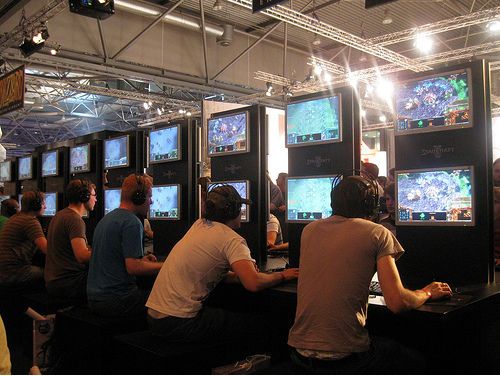
Several years ago IDG Connect conducted research on the emerging area of enterprise buyer games to be offered as a new content format. That is, what buyers felt about using online, interactive games as a content format to enable a more informed buying decision?
The results were overwhelmingly affirmative. Over 80% of enterprise buyers play games of some type, and over 85% desire that vendors include games as part of their content mix to assist them in their decision making. Call it edutainment, call it interactive marketing, call it what you will. The interest is there.
I had to laugh about a year ago when I was shown a game that cost over $100,000 to create, presented as a ‘test your knowledge quiz show’. I thought, imagine how many other assets you could create with that money. If I didn’t answer the questions correctly, which by the way were inane ones about celebrities and events, I lost. Such fun. Was the vendor just trying to make me feel like they were fun to be around?
While vendors talk about gamification and using it to drive awareness and lead generation I sense they leave it up to their agencies to come up with some clever ideas. So, what we see are mostly games that entertain but certainly don’t educate. They usually deliver a punch line but along the way the buyer has learned nothing that links to the distinct value the vendor offers - they fail to connect the interactive experience to the solution.
Wrong approach. The ideas for games should come from within – specifically focus on those individuals who are involved in integration, implementation, readiness assessment, best practices, key challenges, measuring value. If you don’t go to the subject matter experts, those that do will likely gain some important ingredients detailed below. You can always have someone creative offer an interesting scenario. Here are some questions you need to pose in any game asset effort.
- • What are the value propositions you have and how is it reinforced through the game?
- • Is the game realistic?
- • Can I adjust some of the game assumptions to better reflect my own organizational realities?
- • How can the game highlights the gaps in skills, resources, technology or otherwise that the client lacks?
- • What are the real ramifications of losing? Is it that I get hit by the joy buzzer or am I really given a sense of the risk?
- • Does my playing the game offer any ability to extend what is learned out to a broader group?
- • Can the game be played by a group where the combined insight can be greater than the parts?
Let’s look at a game that another part of IDG created several years ago that makes the point in how things should be done. (Note, I did not develop the game nor make a penny off of it.) The game was centered on disaster recovery decision making. You see a wonderful graphic of a building, then disaster strikes as a fire destroys it. The CIO is told there is a board meeting in two hours and they want a recovery plan. The game offers the CIO different options, different choices must be made and priorities required. It combines their knowledge with the live-use of alternative approaches, analytics as well as backup/recovery contingencies. Whole game scenario takes five minutes to work through. The CIO gets scored on if they have a logical plan to offer based on resources, time and expertise. Game over, educational success.
The CIO walked away knowing where they were weak, strong, prepared or not ready. They could take that forward for discussion, and guess what? Multiple gap areas were addressed by the vendor’s solution. But not by beating him or her over the head with it during the game. Rather afterwards, subtly, with related assets that help convey how one can improve readiness and response. Sense of risk reduced, feeling of control enhanced.
When that RFP comes out from that prospective client who played the game do you think that it might reflect some of the issues, value propositions and approaches the game conveyed? Of course it will. So… the things to think about in conceptualizing a game are, that’s right, the concept, the issue, the challenge. Not if it be funny, cute or pretty. Rather connect it in some way to a real-life scenario that one can face using your solution. That helps increase your alignment with buyer issues and the momentum they have towards your approach and offering.
By Bob Johnson, Principal Analyst at IDG Connect