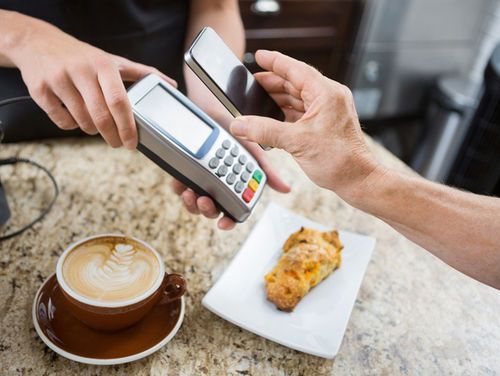
With the penetration of mobile devices, such as smartphones and tablets constantly growing, attention is increasingly turning to mobile marketing, mobile commerce and mobile payments.
But what people often tend to overlook is that, strictly speaking, there is no such thing as mobile payments. The background payment processes are always the same – on someone’s instruction, money is transferred from one account to another, regardless of whether the payment was authorised by direct debit, electronic transfer, debit or credit card, or by pressing ‘confirm’ in an app. Fundamentally, there is nothing different about the actual payment processes – they are simply adapted for mobile devices.
Pilot mobile processes
Mobile payments are regularly experimented with globally. Payment service providers, telecoms companies, mobile manufacturers, merchants and service providers have investigated a variety of technologies and developed different apps and processes. Approaches focus on scanning QR codes from a special app or creating mTANS. The latter requires a special chip in order to use NFC (near field communication) for example, or even a vendor-specific device, such as a Bluetooth-capable Apple iBeacon. With all of these developments running in parallel, rolling mobile payments seamlessly across each and every country will not be easy.
Multichannel commerce requires multiple payment options
Regardless of which technologies ultimately gain the widest acceptance for individual payment scenarios, both device manufacturers and payment service providers must initially be able to support as many payment methods as possible. Merchants face an additional challenge here. The more the boundaries between brick-and-mortar and e-commerce become blurred, the less likely customers will be to accept that certain payment options are restricted to certain channels. They might ask for instance why they can pay by invoice online, but not on the high street. Or why they can only use a discount coupon in a shop, but not when they order online with click-and-collect.
If merchants want to keep customers loyal in the long term, they will have to offer a uniform retail experience and ensure that payment options are consistent across all channels. A key success factor here will be the range of payment schemes they make available, bearing in mind that each country has its own preferences.
Choosing the right payment service provider
Given these market dynamics, merchants will have to be very careful when choosing their payment service provider (PSP). According to a survey by the PSP Worldpay, over 40% of online purchasers would spend more if vendors offered a greater choice of payment systems. With customers increasingly expecting a uniform experience across all retail channels, a wide range of payment options becomes essential not just for online stores, but also at points of sale. Mobile payments will be just one of many options taken for granted in the future. Merchants should therefore select a PSP partner with international reach and an offering that includes as many alternative payment methods as possible. Ideally, they would also offer other financial services, such as prepaid cards and gift certificates, or – with mobile payments on the radar – individualised NFC products like stickers, key-rings, etc.
Compliance with regulatory requirements
For both the payment service provider and the merchant as the last operative link in the payment chain, compliance with payment process regulations is paramount. However, this is increasingly challenging as requirements are becoming ever more complex, especially in light of the need to support multiple international and alternative payment schemes. For merchants and PSPs alike, it is wise to select a partner with the relevant certifications and an e-money license. Ideally, payment solution providers should deliver one-stop financial services spanning acquiring, issuing and processing through a fully integrated technical platform and under a single contract. PSPs and merchants should check whether their prospective payment partner has international knowledge about payment methods, regulatory requirements, compliance and risk management. Likewise, when it comes to mobile payments, they should ensure that the payment solution provider supports a wide range of processes – from wallets and Apple’s iBeacon to QR code and NFC solutions.
While it is true that mobile payment is still essentially in its infancy, in ten years from now, payment via smartphone, smartwatches or other intelligent devices is likely to be just as commonplace as paying by debit or credit card today.
Tobias Schreyer is co-founder of The PPRO Group